




When people picture gold, they usually picture a bar in a vault, a Britannia in a capsule, or perhaps a sovereign handed down through a family. But investment bullion is only one destination for the world’s gold. And not necessarily the largest or most visible one.
Before a gold coin reaches a private investor, the metal may have travelled through a mine, a refinery, a wholesale vault and a mint. Yet much of the world’s gold takes a completely different route. It becomes jewellery, electronics, medical equipment, industrial components, decorative leaf or material that is later melted down and used again. Gold does not stop being gold when it leaves a vault. That is one reason it has retained its importance for thousands of years.
Gold begins as ore
Gold does not emerge from the ground in neat one-ounce coins or cast bars. It is usually found in ore: rock containing very small concentrations of gold alongside other minerals. The mining process is demanding. Large quantities of rock must be crushed and processed to extract a relatively small amount of metal. Once recovered, the gold is refined to remove impurities and bring it to a recognised level of purity.
This is where gold starts to become globally tradable. A refinery turns mixed or impure material into standardised bullion, normally in the form of bars. At the wholesale level, the most familiar format is the London Good Delivery bar: roughly 400 troy ounces, or around 12.5kg, with a minimum fineness of 995 parts per thousand. These are the large bars associated with central-bank reserves and professional bullion trading rather than the smaller bars most private investors buy.
One metal, many destinations
Once refined, gold does not all follow the same path. Some is cast into large wholesale bars and held in professional vaults. Some is supplied to mints to become coins and smaller investment bars. Some is sold to manufacturers. A useful way to think about gold is that it has several lives:
- Investment gold becomes coins, bars and vaulted holdings.
- Jewellery gold is alloyed with other metals to improve durability or alter colour, then made into rings, chains, watches and other items.
- Industrial gold is used where corrosion resistance, conductivity and reliability matter.
- Recycled gold returns from jewellery, old electronics, scrap and industrial residues to be refined again.
The same ounce can move between these categories over its lifetime. A Victorian ring can be sold for scrap, refined and eventually reappear as part of a newly minted gold bar. Gold’s value is not tied to its original form.
Jewellery is not “lost” gold
It is tempting to think of jewellery as gold leaving the investment market forever. That is not quite right. Jewellery may be worn for decades, stored in a drawer, sold second-hand or passed through a family. But unlike many consumer goods, its precious-metal content remains recoverable. A damaged chain has less appeal as jewellery, yet its gold content still has value. It can be melted, refined and returned to the market. This is one of gold’s unusual strengths. A mobile phone loses usefulness, a car deteriorates and a fashion item can become worthless. Gold may change shape, but the metal itself remains.
That does not mean every piece of jewellery is a good investment. Workmanship, brand, condition and retail mark-ups all affect resale value. But it does mean gold in jewellery is not simply consumed in the way that many raw materials are.
The gold inside technology
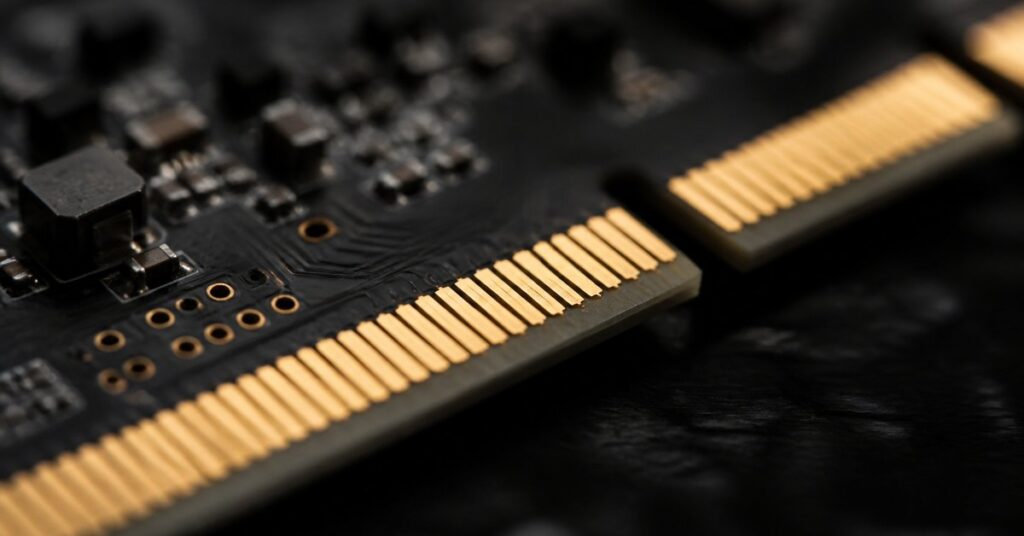
Gold is also used in places most people never see. Its resistance to corrosion and dependable electrical conductivity make it useful in small but important components. It can be found in connectors, switches, circuit boards and specialist equipment where failure is costly or unacceptable.
The amount in any one phone, computer or appliance may be tiny. Across millions of devices, however, those amounts become significant. The challenge is that recovering gold from electronic waste is much more difficult than recovering it from a ring or a bar.
A gold sovereign can be assessed and sold quickly because its weight, purity and recognisability are well established. A pile of discarded circuit boards is another matter entirely. It must be collected, sorted, processed and refined before the underlying metal can return to the market. That is why electronic waste is often described as a potential source of “urban mining”. The gold is there but extracting it economically and responsibly is the hard part.
Why some gold stays in vaults
So why does any gold remain in a vault at all? The answer is simplicity. Investment bullion is standardised. Its weight and purity are known, its pricing is closely linked to the underlying gold market, and recognised products can be bought and sold without first being melted down or redesigned.
For private investors, that is the attraction of bullion coins and bars. You are not buying gold because it looks attractive on a finger, performs a technical job inside a device or sits on top of a building as gold leaf. You are buying a recognised quantity of precious metal in a form designed to be stored and traded.
At the institutional end of the market, Good Delivery bars allow large amounts of gold to move between recognised vaults and market participants on common specifications. The LBMA’s Good Delivery standards cover matters such as fineness, marks and the requirements for refiners whose bars are accepted in the wholesale London market. At the private-investor end, smaller bars and familiar coins serve the same broad purpose: they make gold ownership straightforward.
Gold’s circular economy
Gold is often described as scarce, but it is also remarkably durable. Very little of the gold ever mined has disappeared in the way that oil is burned or agricultural commodities are eaten. Instead, much of it remains above ground: in jewellery boxes, vaults, central-bank reserves, private collections, electronics, religious objects, decorative work and industrial products. Some is easy to bring back to market. Some is expensive or impractical to recover. Some may not reappear for generations.
That makes gold a circular metal. New mine supply matters, but so does recycling. High prices can encourage more old jewellery and scrap to be sold and refined; lower prices may make owners more inclined to hold on to it. The available supply is therefore not simply a question of what comes out of mines in a given year.
More than a coin or bar
A one-ounce gold coin may be the form most familiar to a bullion buyer, but it represents only one small part of a much bigger gold economy. The journey from mine to refinery, vault, mint, workshop, factory and recycler shows why gold is unlike most commodities. It is not merely extracted and used up. It is reshaped, repurposed, stored, inherited and recovered.
That is the real story behind the gold in a vault: it is not isolated from the wider world of precious metals. It is one highly recognisable, highly tradable form of a metal that may have many lives.
