



Physical gold and silver are often bought with the long term in mind. Some people invest gradually over many years, adding coins or bars when they can. Others receive sovereigns as gifts, inherit a small collection from a parent or grandparent, or keep bullion as part of a wider plan to protect family wealth. But there is one part of bullion ownership that is easy to overlook: Would your family know what you own, where it is, and what to do with it if they needed to?
Gold and silver have advantages that many people value. They are tangible, portable and do not rely on an online account, password or bank to exist. However, those same qualities can make them difficult for relatives or executors to deal with if the owner has not left clear information behind. A little preparation can prevent a great deal of uncertainty. It can also help ensure that valuable bullion is not mistaken for costume jewellery, an old coin collection or scrap metal.
This guide covers both sides of the question: how to organise physical precious metals during your lifetime, and what family members should consider when they inherit bullion.
Why bullion can be overlooked
To an experienced buyer, a one-ounce Gold Britannia or a 100g gold bar is easy to recognise. To someone with no precious-metals experience, it may not be.
A gold coin could be assumed to be an old souvenir. A silver bar could be left in a box with other household items. A collection of sovereigns may be mixed with jewellery, medals, commemorative coins and other possessions that all need to be assessed differently.
That matters because bullion is not always valued in the same way. A modern bullion coin or bar is generally valued by reference to its weight, purity, live metal price, condition and dealer buy-back terms. A rare coin may carry an additional collector premium. Jewellery may have value beyond its gold content because of its design, brand, gemstones or craftsmanship.
The key point is simple: not every item containing gold or silver should be sold as scrap, and not every old coin has a collector premium. Clear records help relatives understand what they have before making decisions.
Build a simple bullion inventory
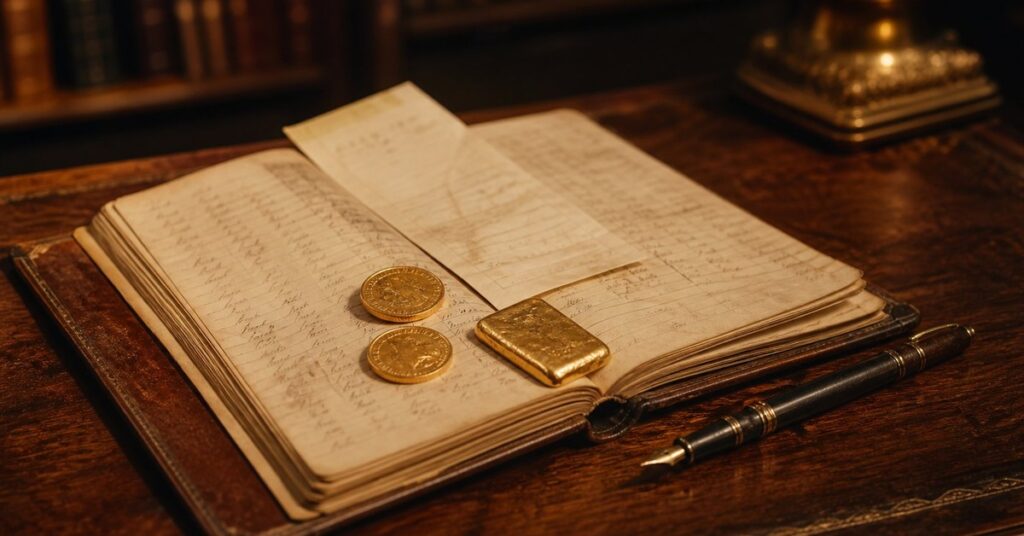
A bullion inventory does not need to be complex. A secure spreadsheet, written list or private digital document can be enough. For each item, record:
- Product name, such as Gold Britannia, Gold Sovereign, Krugerrand or silver bar
- Quantity held
- Weight, for example 1oz, 100g or 1kg
- Purity, where relevant
- Purchase date
- Supplier or dealer
- Purchase price, if known
- Storage location
- Serial number, where shown on a bar
- Any notes on condition, presentation box or possible collector value
For example, a useful entry could read:
2025 one-ounce Gold Britannia, 999.9 fine gold, two coins, purchased from Gerrards Bullion, stored in home safe. Retain invoice. Standard bullion product; obtain a current dealer buy-back quotation before sale.
That is enough information to help somebody identify the item and take sensible next steps.
If you own older coins, unusual products or jewellery that may have value beyond its metal content, make this clear. A simple note saying “seek specialist valuation before sale” can be very useful.
Keep invoices and records together
Invoices are valuable evidence. They show what was bought, when it was bought and who supplied it. They may also help a family member distinguish between a 1oz coin, a half sovereign and a commemorative issue that looks similar but has a different precious-metal content.
Keep copies of:
- Purchase invoices
- Certificates and assay cards
- Storage-account details
- Previous valuations
- Any correspondence about rare or collectible items
- Details of bullion held in a pension, trust or professional storage arrangement
It is sensible to keep a digital copy, but do not rely on a file that only you can access. At least one trusted person should know where the information is held and how to find it.
Security matters too. Avoid displaying detailed lists, photographs, quantities or storage locations publicly. Your records should be available to the right people, not widely shared.
Tell someone the bullion exists
Many bullion holdings are private by design. That is understandable. However, complete secrecy can create problems if no family member knows what exists or where to look. Gold stored at home, in a safe, in a safety-deposit arrangement or with a professional vault can easily be missed if there is no record. You do not need to tell several people every detail. But it is sensible for a spouse, executor or trusted family member to know:
- That you own gold or silver
- Where your inventory and invoices are kept
- Whether anything is stored professionally
- Who your preferred bullion dealer is
- Whether any items require specialist advice before being sold
If you have written a will, it may also be worth discussing your holdings with the solicitor preparing it. This is particularly important where bullion is intended for a specific person rather than simply forming part of the wider estate.
What happens when bullion is inherited?
When a person dies, their gold and silver normally form part of their estate. The estate’s executors or administrators are responsible for identifying the assets, obtaining appropriate valuations, paying any estate liabilities and distributing the remaining assets in accordance with the will or intestacy rules.
In practical terms, inherited bullion may be:
- Sold by the executors and the cash distributed to beneficiaries
- Transferred as physical coins or bars to a beneficiary
- Divided between several beneficiaries
- Retained temporarily while the family decides what to do
Before making a decision, it is important to establish exactly what the holding contains and what it was worth at the date of death. This is not just an administrative exercise. The date-of-death value may be relevant both for inheritance-tax reporting and for calculating any future Capital Gains Tax if the bullion is sold later.
Inheritance Tax: the estate position
Gold and silver are generally included when calculating the value of a deceased person’s estate for UK Inheritance Tax purposes. That includes gold bars, silver bars, foreign bullion coins and UK legal-tender bullion coins such as Britannias and Sovereigns. The fact that a coin may have a favourable Capital Gains Tax treatment during the owner’s lifetime does not, by itself, remove it from the estate for Inheritance Tax purposes.
Whether Inheritance Tax is payable depends on the value of the whole estate, available allowances, gifts made during the person’s lifetime, the terms of the will and other individual circumstances. If tax is due, it is generally an estate liability handled by the executors – not a separate tax bill automatically charged to a beneficiary simply for receiving gold. For a significant holding, a written professional valuation at the date of death is prudent.
Capital Gains Tax after inheritance
There is normally no Capital Gains Tax charge simply because bullion passes to a beneficiary on death. However, if the beneficiary later sells inherited bullion for more than its value at the date of death, there may be a Capital Gains Tax liability.
The starting value is normally the market value at the date of death, or the value adopted for Inheritance Tax purposes – not what the original owner paid years earlier.
For example:
-A family member leaves gold bars worth £25,000 at the date of death.
-The bars are transferred to a beneficiary.
-The beneficiary sells them later for £31,000.
-Before costs and allowances, the relevant gain is £6,000.
That is why a robust probate valuation matters. Without it, a beneficiary may struggle to show the correct starting value when the time comes to sell. For the 2026/27 tax year, the annual CGT exempt amount for an individual is £3,000. A person’s actual tax position will depend on their other gains, losses and taxable income, so substantial sales should be discussed with an accountant or tax adviser.
Coins, bars and tax treatment
The form of bullion can be important. Gold bars and most foreign bullion coins are generally assets that can give rise to Capital Gains Tax if sold at a profit. UK legal-tender coins – most notably Gold Britannias and Gold Sovereigns – are generally exempt from Capital Gains Tax for UK-resident individual owners.
This can make legal-tender coins attractive to some buyers. However, it does not mean that every coin is automatically tax-free, and it does not make those coins exempt from Inheritance Tax as part of an estate. It is also important not to assume that jewellery, collectible coins and bullion all follow identical rules. If an inherited holding includes mixed items, seek a proper valuation before selling.
Selling inherited bullion sensibly
Inheriting bullion does not mean that a family must sell immediately. Some beneficiaries may prefer to keep gold or silver as a long-term holding. Others may need to sell to settle estate costs, divide an inheritance fairly or meet personal financial needs. Neither approach is automatically right or wrong. Before selling, consider the following:
- Confirm exactly what each item is and its weight and purity
- Keep the probate valuation and supporting documents
- Obtain a current buy-back quotation from an established bullion dealer
- Ask whether an item has potential collector value beyond its metal content
- Keep a record of the sale price and any relevant selling costs
- Obtain tax advice if the sale is substantial or a gain may arise
Make the process easier now
The best time to organise a bullion record is before anyone needs it. If you own physical gold or silver, take an hour to list what you have, keep invoices together and make sure one trusted person knows where to find the information. If you inherit bullion, take time to identify and value it properly before deciding whether to retain or sell it.
Physical precious metals can form an important part of a family’s long-term wealth. Good record-keeping helps ensure that the value you have built is understood, protected and handled with confidence when it matters most.
This article is for general information only and is not tax, legal or financial advice. Tax treatment depends on individual circumstances and can change. Executors, beneficiaries and bullion owners should obtain advice from a qualified solicitor, accountant or tax adviser where appropriate.
