


Silver enters 2026 in rare form. After surging to around $51 (£39) per ounce, the metal is trading at levels not seen in decades, fuelled by strong industrial demand, tight physical supply and renewed interest from investors looking for both growth and protection. The key question now is whether this rally can carry significantly higher from today’s price, or whether current levels already reflect most of the good news baked into bank and analyst forecasts.
Drivers: Industrial Demand and Supply Deficits
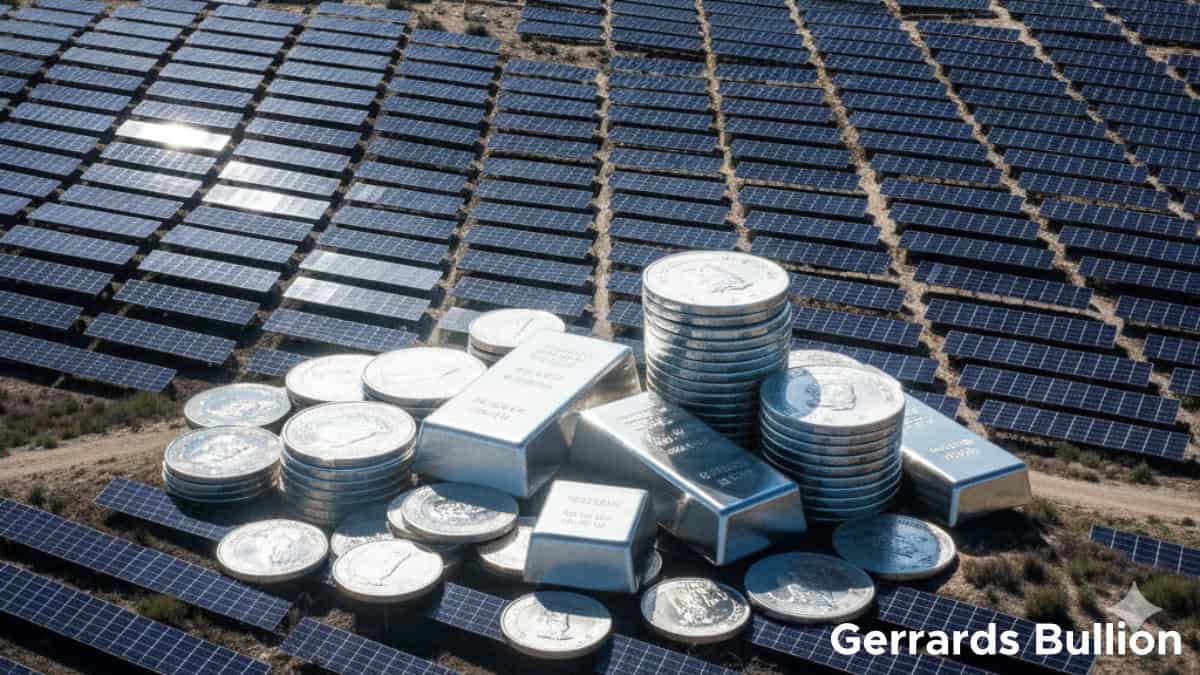
Silver’s bullish outlook is rooted in chronic supply deficits. 2025 will mark the fifth consecutive year in which demand has outpaced mine output, according to WisdomTree strategist Nitesh Shah. Industrial demand shows no signs of abating, with solar panels, electronics, and EV production absorbing current output. As most silver is mined as a by-product of other metals, rapid price spikes tend not to boost supply, tightening the market further. ETF inflows and safe-haven investment are picking up as the dollar weakens and central banks pursue rate cuts, spurring additional rotation from gold to silver. Notably, as gold prices climb, some investors see silver as a more accessible alternative and a strategic inflation hedge.
Risks and Volatility
Despite widespread optimism, risks remain. Silver’s industrial side exposes it to corrections if demand falters or ETF inflows reverse. High prices may dampen jewellery and coin demand, and strong previous buying has impacted the market for bars and coins. Analysts warn that silver could face sharp swings if macroeconomic conditions shift, or if central banks alter policy unexpectedly.
Current price and “base case” expectations
With spot silver hovering near $51 (£39), many mainstream forecasts published earlier in 2025 now sit below the current market and should be seen as conservative base case anchors rather than live upside targets. For example, a typical mid $30s 2026 forecast (around $35, roughly £27) from early to mid 2025 now implies a potential pullback of about 30% from today’s price, not an advance. Some quantitative and futuresbased models still cluster around the high $40s to low $50s for yearend 2026, with one composite forecast published in October 2025 putting the year end band at roughly $47–51 (about £36–£40). From a $51 starting point, that range effectively says “sideways to slightly lower”, framing today’s price as close to fair value if the rally plateaus and volatility persists.
Major bank and institutional targets (rebased to $51)
Bank of America
On 13 October 2025, Bank of America raised its silver outlook to around $65 (£50) per ounce for 2026, driven by structural deficits and strong industrial demand. From today’s $51, that target implies further upside of roughly $14 per ounce – about 27–30% potential growth if its thesis on tight supply and industrial offtake continues to play out.
UBS
In a series of updates through November 2025, UBS lifted its silver forecasts and now projects around $52–55 (£40–£43) for 2026, with commentary on 20–22 November 2025 emphasising a specific target of $55 by mid 2026 and the possibility of testing $60. Because silver is already at $51, that mid 2026 $55 call implies modest additional upside of roughly 8%, while the lower end of its earlier $42–44 band now looks more like a consolidation or pullback zone than an upside objective.
Citigroup
While the broader sentiment remains bullish, not all institutions are convinced the rally will move in a straight line. In late October, Citigroup downgraded its near-term outlook, lowering its target from $55 to $42 per ounce. The bank cited reduced market uncertainty as a reason for a potential pullback, suggesting that silver could consolidate or retrace to these lower levels before finding new support.
HSBC
On 8 August 2025 and again on 8 October 2025, HSBC raised its silver projections, putting the 2026 average first at $33.96 and then nearer $44.50 (£26–£34), with a broad projected trading band of roughly $40–55 for that year. From a $51 starting point, the lower average numbers now imply the possibility of a sizeable correction into the lowtomid $40s, while the upper end of the band (around $55) sits only slightly above current spot.
Bullish scenarios and higherend projections
Alongside the more cautious numbers, several analysts and research firms outline scenarios in which silver continues to climb well beyond $51. An October 2025 “metals supercycle” outlook, for example, sees silver advancing toward about $60 (£46) by 2026, representing roughly an 18% gain from today’s level if realised. Larry Lepard of Equity Management Associates, quoted in a November 19, 2025 interview with Investing News Network, stated he sees silver reaching $75 (£58) by mid-2026, with scope for $80-90 by year-end in a strong growth scenario. At the upper end, a mix of longterm models and “superbull” views published through late 2025 suggest that silver could eventually challenge $80–100 (£62–£77) later in the decade if supply deficits deepen and investor enthusiasm accelerates. Taken from a $51 base, those numbers would represent upside of roughly 55–95%, underlining just how sensitive silver can be to shifts in sentiment and physical tightness when conditions line up.
Final Word: Investment Outlook
Silver’s 2026 outlook remains broadly bullish, bolstered by persistent supply deficits, surging industrial demand, and growing safe-haven appeal amid dollar weakness and rate cuts. Yet volatility looms large, with risks from policy surprises or demand slowdowns potentially triggering pullbacks toward the mid-40s. For Gerrards Bullion clients, this positions silver as a prime portfolio diversifier—whether chasing tactical upside to $55–65 or anchoring long-term hedges—provided positions align with risk tolerance and track evolving bank forecasts like those from UBS and Bank of America.