


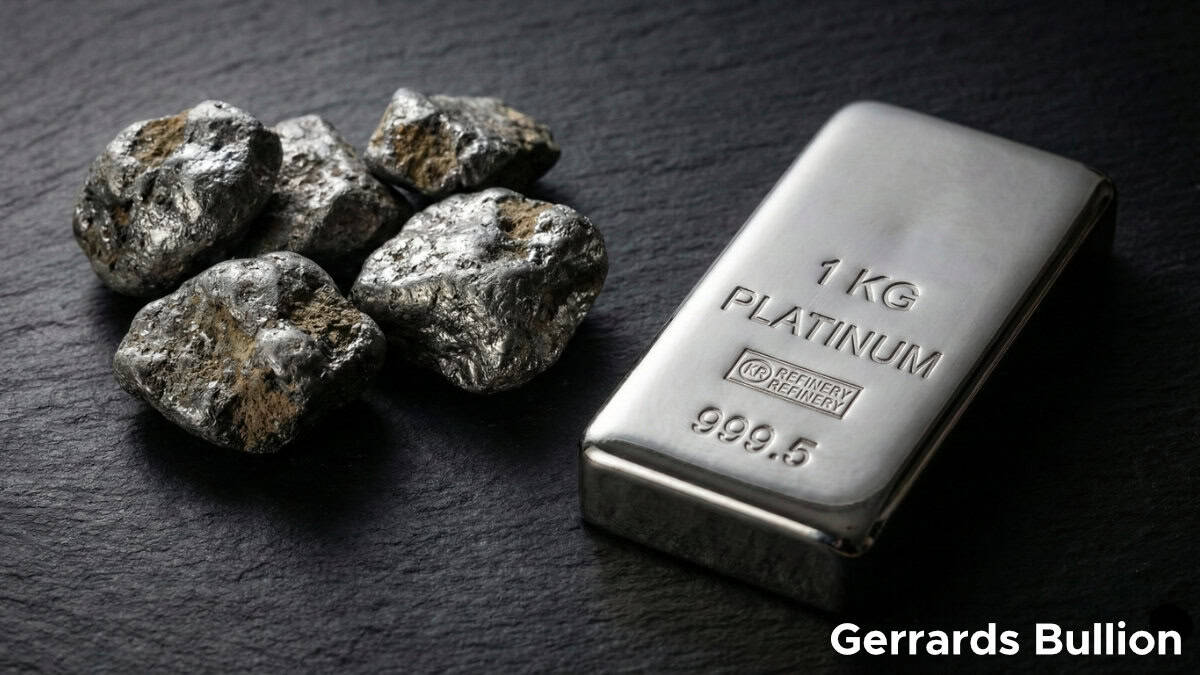
After a strong run in 2025, analysts expect platinum to continue its upward momentum in 2026, though with more stability rather than another steep climb. Prices are likely to settle at elevated levels as the market shifts from a sharp deficit towards a more balanced situation. Most forecasts still point to platinum’s average price being higher in 2026 than in 2025, but gains are expected to be more gradual following this year’s exceptional rally.
What Experts Say About Prices for 2026
Recent surveys of banks, brokers, and commodity firms show a consensus average price of around $1,550 (£1,171) per troy ounce for platinum in 2026. This is up from earlier estimates near $1,272 (£962) and well above the projected average of about $1,250 (£946) for 2025. Some metals research companies are more bullish; one consultancy predicts an average closer to $1,670 (£1,264), which would mean a more than 30% increase on 2025’s average price. Many observers point out that 2025’s roughly 75% price surge to date, may have already reflected much of the upside, leading to expectations of consolidation with potential for further gains if there are supply disruptions, tariff issues, or renewed interest as a safe-haven asset.
Supply Side: Moving from Deficits to Balance?
Platinum’s supply over recent years has been marked by ongoing shortages and production challenges, especially in South Africa, which dominates global output. Data suggests that mine supply in 2025 will be 5% lower than in 2024 and around 10% below the five-year average before the pandemic. This drop is due to underinvestment, power supply issues, infrastructure problems, and some shaft closures. For 2026, supply is expected to grow modestly by around 4%, mainly through increased recycling of automotive catalysts and jewellery rather than a big jump in mine production. Despite this uptick, medium-term studies suggest mining output may slightly decline over the rest of the decade, keeping the market structurally tight even if it looks more balanced next year.
Demand Outlook: Autos, Industry, and Investors
In 2026, platinum demand is expected to revolve around three main sectors: automotive, industrial, and investment. The auto industry continues to drive demand due to stricter emissions regulations worldwide and the ongoing switch from palladium to platinum in gasoline catalytic converters. Vehicle use of platinum is forecast by the WPIC to be 3.03 million ounces in 2025 and is expected to stay above the previous five-year average in 2026. Industrial demand, which reached record highs in glass applications during 2024, is anticipated to drop 22% in 2025 before stabilizing at strong historical levels in 2026, particularly in chemical and glass sectors in China. Investment demand in 2025 has been volatile with significant ETF inflows and some profit-taking. The World Platinum Investment Council anticipates solid bar and coin demand for 2025 but expects large ETF and exchange stock outflows in 2026, likely leading to a weaker net investment contribution. Nevertheless, longer-term prospects remain positive given supply constraints, reduced inventories, and the possibility that platinum could benefit if strong gold prices push investors toward precious metals more broadly.
Market Balance and Above-Ground Stocks
After three straight years of deficits through 2025, with a shortfall estimated at about 692,000 ounces for this year, some forecasters predict the market could approach balance in 2026. One scenario from the World Platinum Investment Council suggests a tiny surplus of around 20,000 ounces, which is essentially flat relative to total annual demand in the millions of ounces. This assumes geopolitical tensions ease and investment flows remain moderate. Looking further ahead, the WPIC expects average annual deficits of around 7–9% of demand later in the decade. This implies that even a slight surplus in 2026 would come after a period of significant undersupply and depleted above-ground stocks. These conditions make the market vulnerable to production disruptions in South Africa or Russia, fluctuations in recycling, or trade policy changes affecting critical minerals.
Key Themes and Risks in 2026
For investors, much expert commentary describes platinum as being in the mature phase of a bull market supported by solid fundamentals rather than speculative hype. The market’s structural tightness, limited new mine investment, and consistent deficits provide a sturdy case for medium-term price strength. However, the move toward balance and softer investment interest could curb extreme price moves unless new shocks occur. Macro factors will be key swing points: the pace of electric vehicle adoption and its effect on auto catalyst demand, potential tariffs on strategic metals, and trends in the U.S. dollar and interest rates could all either support or temporarily challenge the optimistic outlook. Overall, 2026 is seen as a year for platinum to consolidate recent gains, underpinned by tight supply fundamentals and offering selective opportunities for long-term investors comfortable with some volatility and holding it alongside gold and silver as part of a diversified precious metals portfolio.